Arnolfini Portrait —Jan Van Eyck (1434) —National Gallery
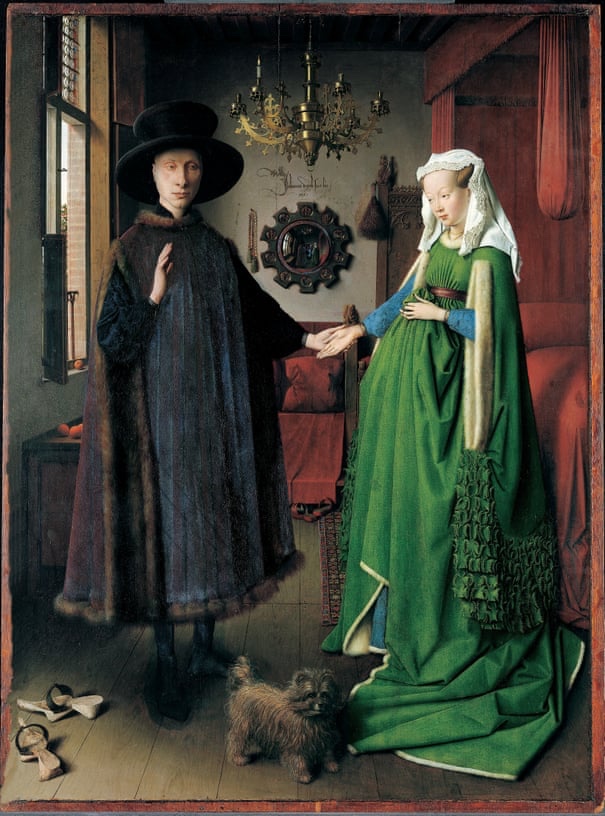
I first learned of the Arnolflini Portrait by Jan van Eyck in a middle school art class. I always remembered the painting because of the mirror in the background. Van Eyck used the mirror to completely recreated the room from the opposite perspective by painting the mirror’s reflection. In one painting you could see the room from two different perspectives, including even the slightest detail. The Story of Art by E.H Gombrich revealed many more details about the painting that I had not initially seen. First, it was important to understand the complexity of the painting and technique required. Van Eyck was a trailblazer in the art world, he introduced the idea that oil could be the medium that binds pigments to the canvas, or in this particular case, the oak panel. This allowed him to create seemingly impossible works of art, including the “Arnolfini Portrait” because he was able to paint slower and with more detail.
The book explains minor details of the painting, for this post I will use the orange on the windowsill, just to the left of the man’s elbow, as an example. The orange is tiny compared to the rest of the work, but still full of detail. This detail includes the orange’s stem, shadow and even its reflection can be seen in the window frame. When you look closely at the mirror you can see that tiny orange’s reflected in the mirror. I first saw this because of an extreme zoom showed in The Story of Art. I knew this was a complex painting, but Gombrich amazed me when he articulated the details of this masterpiece.
I saw the painting in person at Nation Gallery in London. This added another level of admiration. When I saw the painting in person I realized how small each individual brush stroke must have been. The amount of focus and skill required to depict the stem, shadow and reflection of a tiny orange. Then the required skill is taken a step further to recreate the shadow and reflection(on the windowsill) in the mirror’s reflection.
Atlantic Civilisation— André Fougeron — Tate Modern Gallery
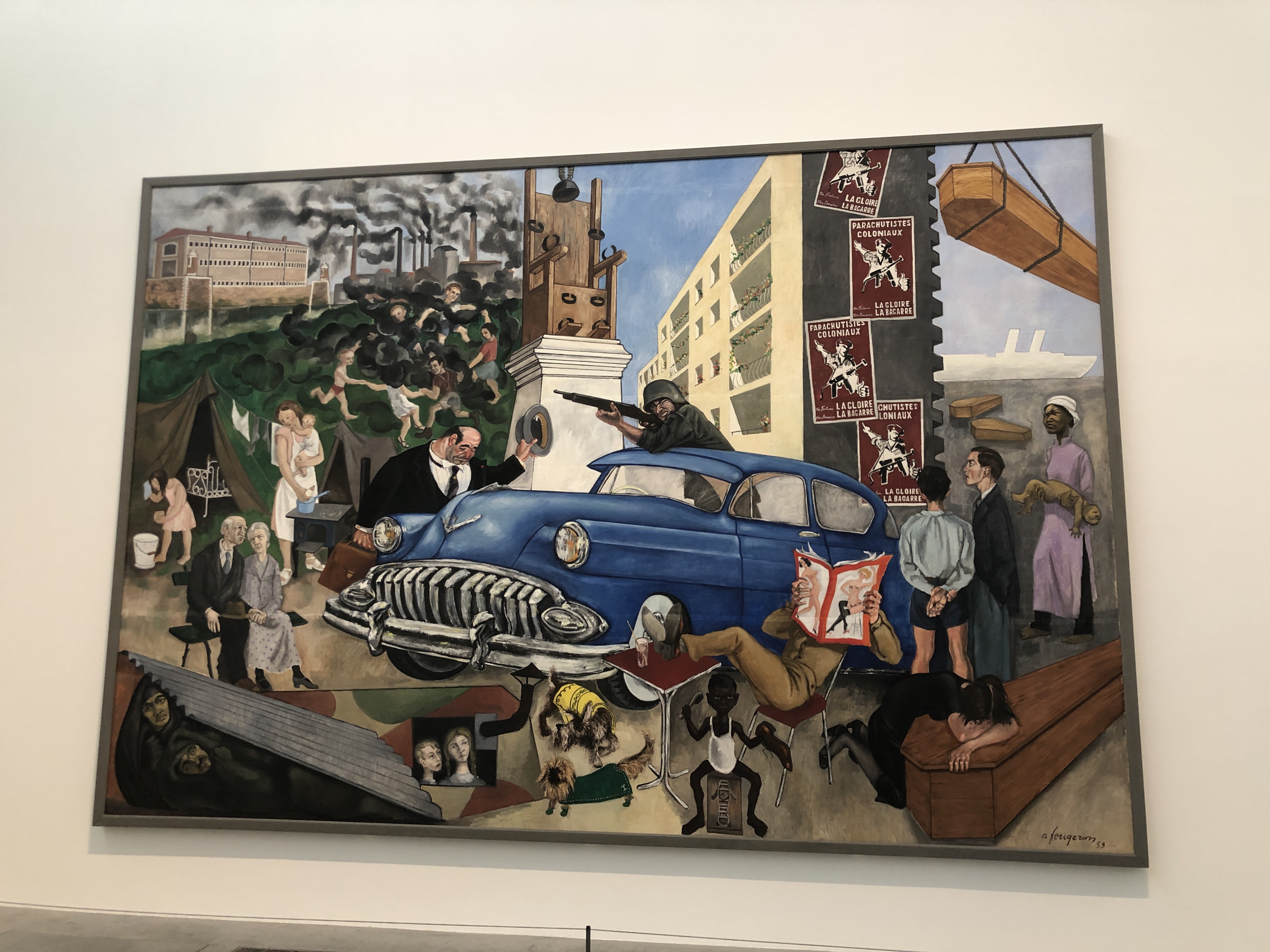
The Tate Modern art gallery displays a 1953 Andre Fougeron work entitled “Atlantic Civilisation.” I was immediately drawn to this painting because of its enormous size and chaos. The painting includes many caricatures, all very different. These caricatures represent a wide array of social issues. This forced me to look closely and slowly interpret the painting section by section. This process felt as if I was decoding a puzzle.
As I scanned the painting I first focused on the top left corner. I could immediately recognize the message. Fougeron depicts a large factory with streams of smoke flowing into a nearby park. The smoke wraps around the park and intertwines between children as they play. I recognized this message so quickly because the issue of industrial pollution is still a prominent issue in today’s society. Through this I formed a connection with the artist. 70 years after the painting was completed, I was able to bond with the artist over a social issue that has impacted both of our lives.
I did some research to “decode” the rest of the painting, luckily the Tate Modern has an amazing website full of information. With such a chaotic painting, I cannot describe every social issue represented in this post. Instead, I will discuss another section I found very relatable. On the left side of the painting, just below the park, Fougeron painted an elderly couple sitting on a bench alone. Their body language gives off feelings of despair and grief. Which raises the questions why is there nobody there to help them, where is their family? I connected with this one because I have seen grandparents on both sides of my family deal with different age related issues. They lose physical mobility, mental capacity and deal with age-related illness. In all of these case my parents, aunts, uncles, and cousins gave overwhelming support. When I first saw the couple, my immediate reaction was that they look like they could use a helping hand, and there was nobody there. This is how Fougeron symbolizes the growing commonality of familial abandonment.
 Grand Tour — Winter 2020